
When the Advice Everyone Swears by Makes Things Worse
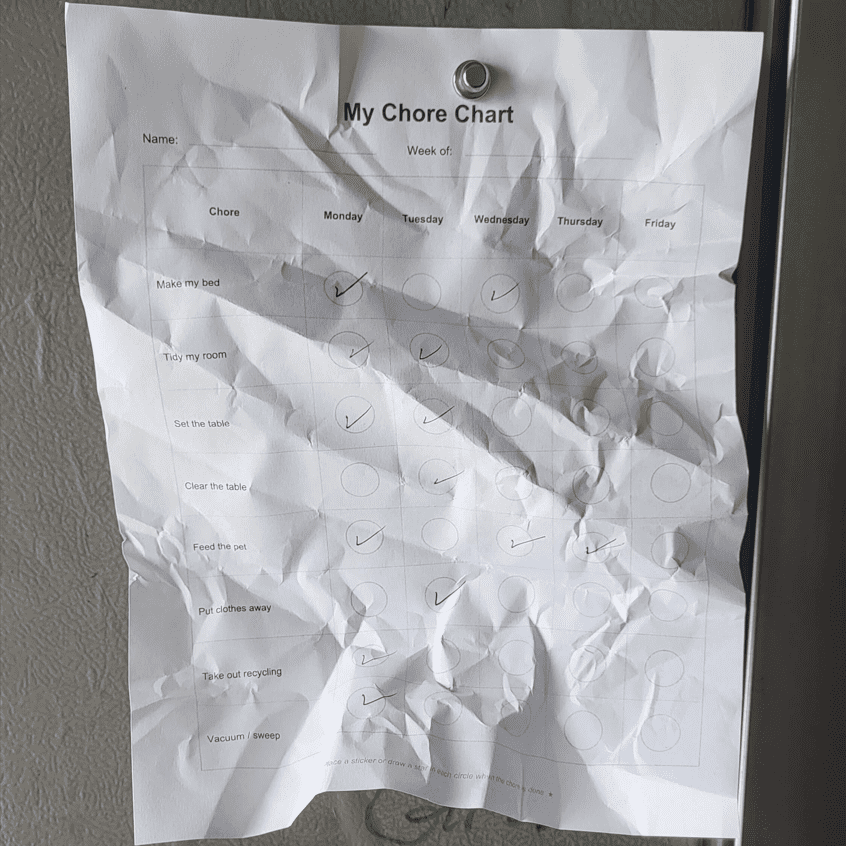
You've tried the sticker charts. You've read the books, listened to the podcasts, nodded along while your sister-in-law explained what worked for her kids. You've been consistent. You've set firm limits. You've tried the gentle scripts.
And somehow — somehow — things keep getting harder.
If that's you, I want to say something before we go any further: you are not imagining how hard this is. And you are likely not the problem.
The Advice Was Never Written for Your Family

Here's what nobody tells you about most parenting advice: it was built for a specific kind of child. A child whose nervous system is mostly regulated. A child who feels safe. A child who, when they're calm, can connect a consequence to a behaviour and file that away for next time.
That's only one child. And the advice, generally, works fine for them.
But it was never written for the child who woke up already dysregulated before breakfast. It wasn't written for the child whose early experiences wired their brain to read correction as danger. It wasn't written for the child who, in the middle of a meltdown, has absolutely no access to logic, reason, or the memory of what the reward chart promises.
It wasn't written for your child. And it wasn't written for you.
Why "Good Advice" Can Actually Make Things Worse
I want to walk through some of the most common strategies — not to dismiss them, but to explain what happens when they meet a nervous system that's already overwhelmed.
"Just be consistent."
Consistency matters. But consistency without connection can feel like a wall, not a foundation. For a child who's learned that adults are unpredictable or unsafe, a parent who never bends, never softens, never meets them where they are — that's not reassuring. That can actually escalate fear. Consistency that looks like relationship, consistent tone and responses, like reasonable flexibility instead of rigidity is necessary - and often not what's taught.
"Ignore the behaviour."
For some kids, being ignored in a moment of distress isn't neutral — it's confirmation of their worst fear. Nobody is coming. Nobody sees me. And so they get louder, bigger, more physical. Or they withdraw, terrified, hiding. Not to manipulate you. Because they are genuinely terrified and need to know someone is still there.
"Use consequences."
When a brain is flooded — truly dysregulated — the part of the brain that learns from consequences is offline. You can't reason with a child who is in survival mode. Consequences delivered in those moments don't teach. They add more distress to an already overwhelmed system.
"They need firmer limits."
Some children already feel constantly threatened, constantly controlled, constantly waiting for something bad to happen. More pressure doesn't create safety. It confirms the threat.
None of this means limits and consistency and consequences don't matter. They do — built on a foundation of felt safety. But when the foundation isn't there yet, the house won't stand no matter how carefully you build it.
What's Actually Going On Underneath the Behaviour
The mindset that repeatedly changed things for me — both in twenty five years of working with high-intensity kids, and in parenting my own three kids adopted from foster care — was understanding one thing:
Behaviour is communication.
The running, the hitting, the meltdown in the middle of the grocery store — that's not a child who needs to be controlled. That's a child whose nervous system is screaming something they don't have words for yet.
I'm overwhelmed.
I'm scared.
I don't feel safe.
I need you to help me regulate because I cannot do it alone.
When kids are struggling, they need support — not stronger punishment.
And here's the other piece most advice skips entirely: regulation comes before reasoning. You cannot teach a child anything — not responsibility, not empathy, not consequences — while they are dysregulated. First, they need to feel safe. Then they can learn.
I've Sat on That Floor Too
I remember a day I was sick — genuinely sick, could barely stand — and I had to run to Walmart for prescriptions. My toddler, freshly recovered from the flu she'd passed to me, had all her energy back while I had none of mine. She pulled her hand out of mine (in hindsight, I should have used a cart) and took off through the clothing department, calling back to me to come get her, laughing.
I couldn't chase her. I couldn't strategize. I couldn't access a single one of the things I knew. I sat down on the floor, in the middle of the store, shaking.
Somehow I convinced her to come sit with me. Somehow we got the medication and got home.
A woman who'd watched the whole thing looked at me on the way out and said, "You're doing a good job."

I almost came apart right there. Because most of what I heard in those days was, "Have you tried telling her to...?"
I knew all the things to tell her. That wasn't the problem. The problem was that I was running on empty, without a team around me, trying to apply strategies that were never designed for what we were actually living.
What Actually Helps
So what does work? I'm not going to give you a tidy list of five steps, because honestly — it's not that simple, and you deserve better than that.
But here's what I've seen make a real difference, in two decades of working with neurodivergent kids and adults, in classrooms with the most intense behaviours, and in my own home:
Support for the parent first. You cannot pour from an empty cup. The biggest shift in our home came when I had other skilled adults around me — people who could step in when I was maxed out, the way a team of coworkers could at school, and when I learned to use my strategies at home with less help. Sometimes, it was with consistent, ongoing support - even when government funding told us it wasn't necessary anymore. The strategies didn't change. My capacity to actually use them did.
Prevention over reaction. The goal isn't to get better at putting out fires. It's to understand what's lighting them. What times of day are hardest? What transitions? What sensory environments? What does the hour before a meltdown actually look like — and what could change in that hour (or 5 minutes)?
Connection before correction. Safety first. Relationship first. The learning comes later, after a child's nervous system trusts that you are for them, not against them.
Realistic expectations and small wins. My kids went from daily physical outbursts to maybe once or twice a year. That didn't happen overnight. It happened slowly, over years, through a thousand small moments of being met with understanding instead of punishment. Celebrate the small wins. They are not small.
Grace. For your child. For yourself. There will be days when everyone loses their temper, including you. What matters is what happens after — the repair, the "I'm sorry," the trying again. That's what your child is learning to do too, by watching you do it.
You Are in the Middle of the Story
If traditional parenting advice has left you feeling like a failure — please hear this: the advice failed you. Not the other way around.
Your child is not broken. You are not broken. You are parenting a child with needs that most advice never accounts for, often without the support you actually need, and you are still showing up.
That matters. That is good parenting, even when it doesn't feel like it.
There is a path forward that works with your child's brain instead of against it. It's not a magic fix. It's not a perfect formula. But it is real, and it is possible, and it is worth finding.
You are in the middle of the story — not at the end.
If this resonated with you, I'd love to stay in touch. [Join my email list] for practical, compassionate support built for the families that most parenting advice forgets.