
Unicorn, Dragon, Kraken: Understanding How Kids Respond to Stress
This framework started with my, then, eleven year old who looked at me and said: "Huh? I don't even know what a possum is."
Fair enough.
I had been trying to explain the nervous system to my child, using Robyn Gobbel's incredible framework (seriously, go check it out here). That when a child feels unsafe or overwhelmed, the thinking part of their brain essentially goes offline and something more overwhelmed or protective takes over. It's well-researched. It explains what parents, caregivers, and volunteers see in high-intensity moments.
But possums don't live on the Canadian prairies. And my son, who is neurodivergent and trauma-impacted, wasn't going to connect with an animal he'd never seen or heard of.
So my fantasy-lover rewrote it.
"No," he told me. "My brain has a dragon."
We talked it through. I explained the concept a different way. He thought about it for a while. And then, piece by piece, over conversations that stretched across more than a year, sometimes with his siblings included, he built something better than what I started with.
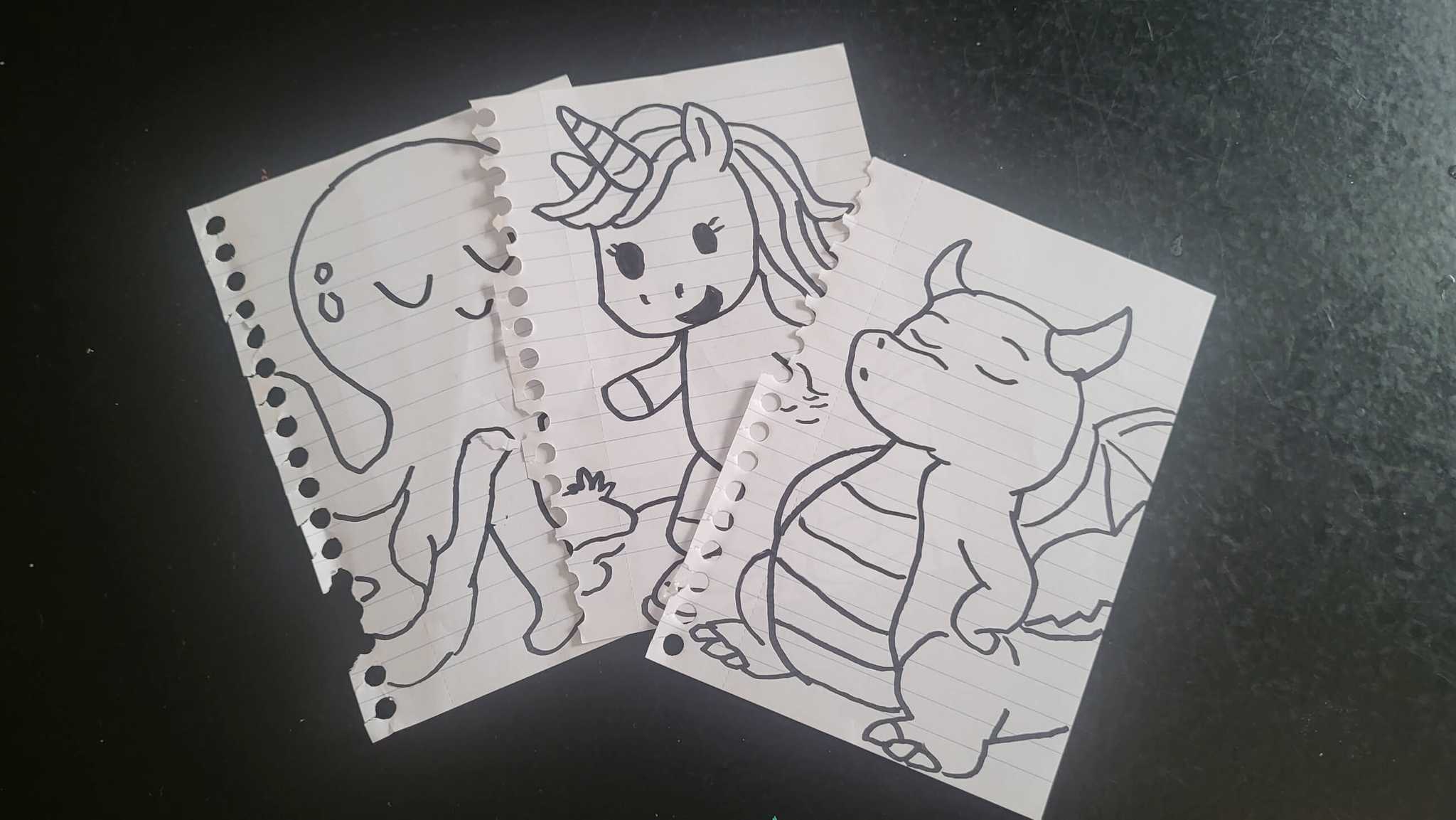
A dragon. A unicorn — his little sister's favourite. And a kraken, for the scared, low-energy place he retreated to when the world got to be too much.
I've been teaching his framework ever since — to parents at home with their kids, and to volunteers, and organizations working with children every day, especially kids who meltdown frequently, escalate quickly, or just generally struggle to handle day-to-day life. Because whether you're a parent trying to survive bedtime or a Sunday school volunteer trying to get through craft time or a camp staff trying to get through an activity area, you're dealing with the same nervous systems. The same creatures. And the same need for a language that actually helps.
Why creatures? Why not just explain the brain and nervous system?
Because when a child is throwing things, nobody has time (or energy) for a neuroscience lecture.
Because when a parent is exhausted and a volunteer is overwhelmed and everyone is just trying to get through the next ten minutes, "dysregulation of the prefrontal cortex" doesn't actually help anyone do anything differently.
But "her dragon is in charge right now" resonates. It creates a little distance from the behaviour. It opens up compassion where frustration was building. It gives everyone in the room — the parent, the caregiver, and eventually the child themselves — a shared language that doesn't carry shame.
These creatures aren't labels. They're not identities. They're not something a child is — they're something a child's nervous system does when it's trying to protect them.
That is the key to the framework.
Meet the Unicorn
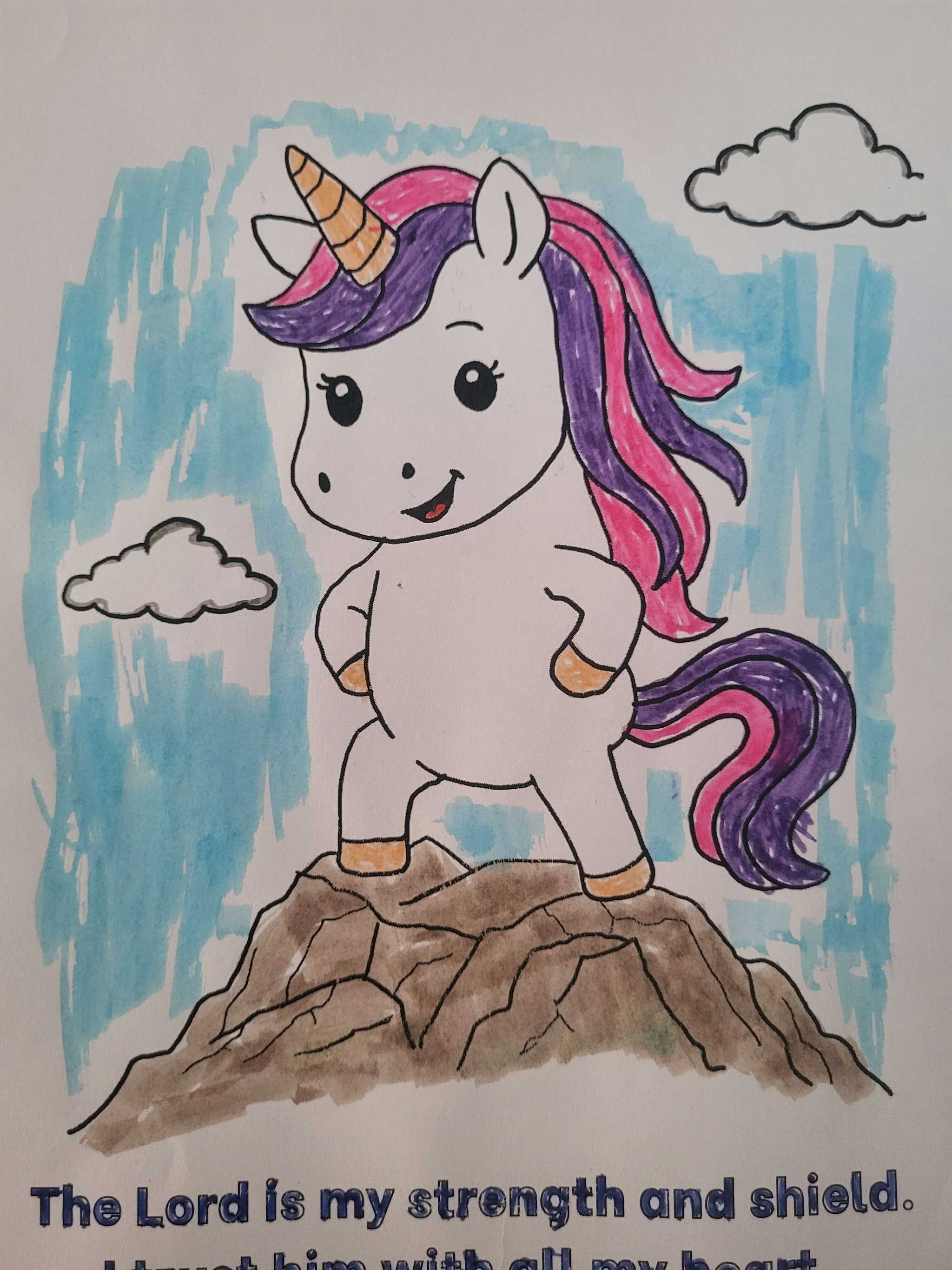
The Unicorn brain is the goal — but let's be clear about what that actually means, because most people picture it wrong.
A Unicorn brain doesn't mean a quiet child. It doesn't mean a still child, a compliant child, a child who is sitting nicely with their hands folded.
It means an available child.
Picture a child jumping wildly on a trampoline — a loud, exuberant, full of energy child. You give them a five minute warning. Then you call them off. And they come. Maybe not instantly, maybe with a grumble, but they shift. They hear you. They can make the transition.
That's a Unicorn brain.
Or picture a group of kids in a program, playing loudly, completely wound up. A conflict breaks out between two of them. And instead of one child exploding or the other disappearing, they're actually able to sit and try to work it out — imperfectly, messily, but trying. A caregiver can redirect them and they can follow.
That's a Unicorn brain.
The Unicorn is in charge when a child can respond in an expected way. When they can ask for help. When they can shift gears, access the skills they've been learning, feel connected to the people around them. My son describes it as when he's most happy with his friends and family, and feels like he's doing well working through the hard things.
It's not a perfect state. It's just an available one. And for many of the kids we work with and love — those Unicorn moments are hard-won and worth celebrating, even when they don't look anything like what we expected.
Meet the Dragon
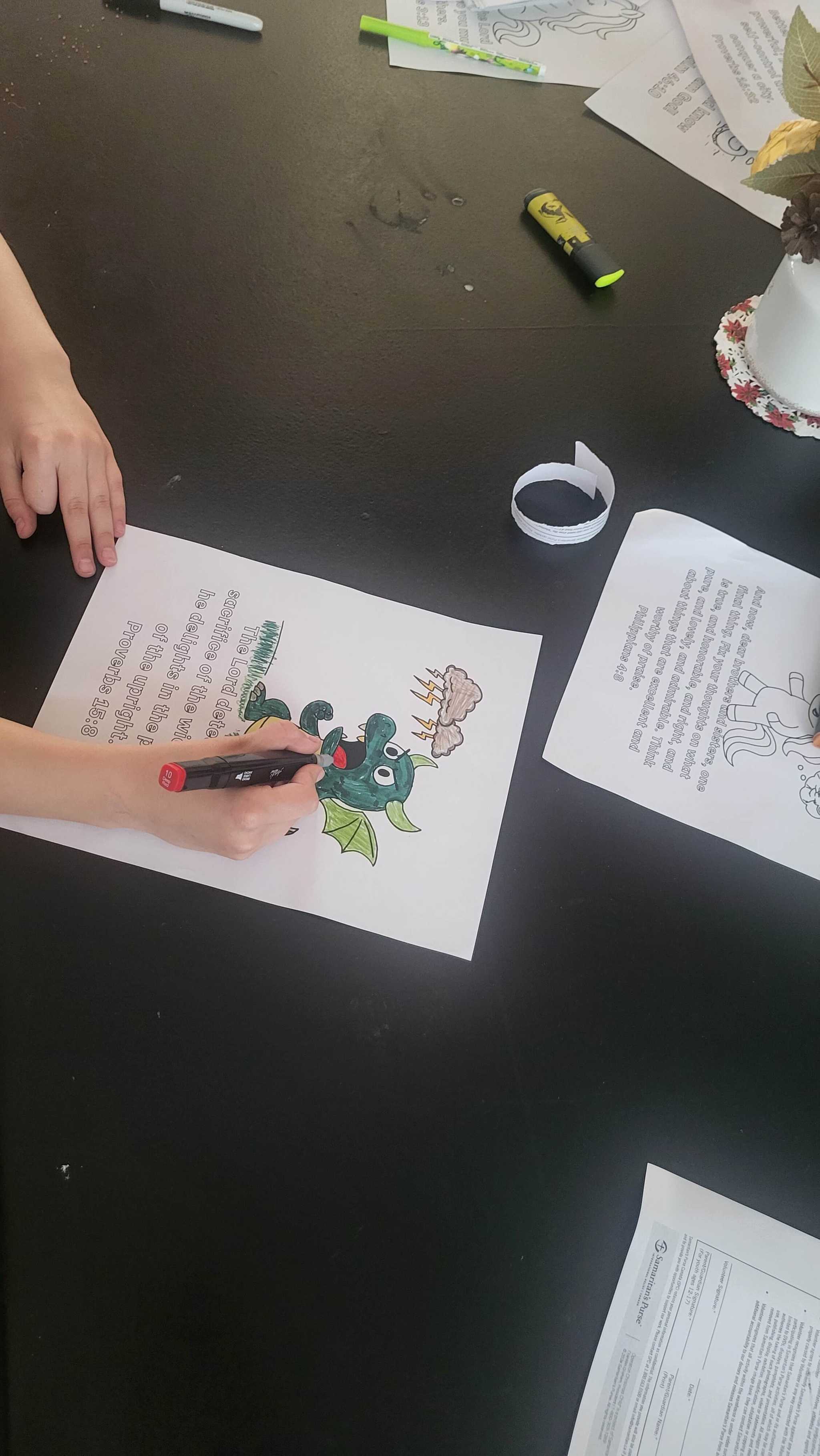
The Dragon is big energy. "Bouncing off the walls" excitement that can't be redirected. Protective energy. Fiery. Intense. Loud.
It can look like explosive anger, walls going up fast, physical aggression, or a child who gets hold of something and cannot let it go no matter how many times you redirect or warn or consequence.
In a home, it might look like a meltdown that comes out of nowhere over something small. In a classroom or program setting, it might be the child who escalates so fast that by the time you've registered something is wrong, everyone in the room knows it. It might mean furniture flying across the room. Nasty, shocking words screamed at the people nearby. A kid getting punched. Pushed. Kicked. Repeatedly, and maybe for an extended period of time until everyone is overwhelmed and nothing seems to help.
My son describes his Dragon this way: "It can cause flames with my behaviour even when I don't want it to, and then damage happens."
Read that again. “Even when I don't want it to.”
That's not a child choosing to be difficult. That's not a child who needs more consequences or firmer limits or a louder voice from the adult in the room. That's a child whose protective brain has taken over because something — real or perceived — felt threatening or overwhelming. The Dragon doesn't distinguish between actual danger and a transition that it wasn't prepared for, or a sensory environment that was too much, or a social situation that felt unsafe.
It responds to the feeling of unsafety. Not the logic of the situation.
When the Dragon is in charge, a child cannot access their conflict resolution skills, their patience, their ability to hear reason. Those things live in the Unicorn brain, and the Unicorn has stepped back. Pushing harder, adding consequences, raising your voice — none of that calls the Unicorn back. It just adds more threat to an already threatened nervous system.
The Dragon needs safety before it needs redirection. Connection before correction. Your calm. Your unicorn.
Meet the Kraken
Here's where I want to slow down — because the Kraken is the one most people get wrong in my experience.
The Kraken looks easier. The child goes quiet, withdraws, stops participating, stares at the floor, pulls away from the group. Compared to the Dragon, it can feel like relief — especially in a busy program or a chaotic home.
It isn't.
The Kraken feels just as unsafe as the Dragon. It's just responding differently to that lack of safety — going low and still instead of big and fiery. My son describes it as hiding under the "ocean of emotions".
For a parent, this might look like a child who disappears into their room, under blanket, and won't come out. For a caregiver or volunteer, it's the child who was fine twenty minutes ago and is now completely unreachable — sitting in the corner, not responding, checked out. On a hard day, it’s the kid that goes running blindly – avoiding their current situation by putting themselves into a truly dangerous one.
The Kraken child still needs us to lean in with connection. Maybe more than the Dragon child, because the Kraken child is so much easier to leave alone — and being left alone confirms exactly what their nervous system already fears: disconnection.
And here's the part that catches people off guard: the Kraken can still cause damage. Push too hard, overwhelm too much, and a Kraken child may run — physically bolt, hide somewhere unsafe, become unreachable in a way that creates real safety concerns. The emotional damage of a Kraken brain — the slow withdrawal, the walls going up, the erosion of connection over time — is often harder to recover from than the visible drama of a Dragon moment.
My son explained it like this: "My kraken also causes flames. Smaller ones, - like when they pull the ship under the water." Generally, once the flames start the Dragon comes out to protect.
The quiet ones, the quiet moments, need us just as much. They're just harder to notice.
All three creatures live in every child — and every adult
This isn't a system for labelling kids. It's a map for understanding moments.
The same child can be in their Unicorn brain at breakfast, their Dragon brain by noon, and their Kraken brain by dinner. The same child who is explosive at home might be a Kraken at school or in a program — masking, containing, barely holding it together all day — and then falling apart the moment, they walk through the front door into safety. That's not manipulation. That's actually a sign of trust.
Some children live in their Dragon more often. Some in their Kraken. Most move between all three depending on sleep, sensory input, hunger, transitions, relationships, and about a hundred other variables that shift from day to day. And that move? It may take a few minutes or an hour sometimes, while other times it may take just five seconds.
And if you're honest with yourself — whether you're a parent, a caregiver, or a volunteer — you probably recognize all three in your own experience. The Dragon day when everything feels like a threat. The Kraken afternoon when you just need everyone to leave you alone. The Unicorn moments when you feel like yourself, available and connected and able to handle what's in front of you.
We're not asking kids to do something we don't also need to do. We’re just usually able to handle it better.
So what do we do?
When you can identify which creature is in charge — in the child, and in yourself — you can respond to what's actually happening instead of just reacting to the behaviour on the surface.
A child in Dragon or Kraken brain needs one thing first: to feel safe. Not managed. Not corrected. Not redirected to the activity. Safe.
That means connection. Presence. Slowing down. Sitting nearby without demanding anything. Offering something concrete — a snack, a glass of water, a quiet "I'm here." Waiting. And then, when the Unicorn brain starts to come back online, that's when the teaching and the conversations and the working it out can happen.
Safety first. Then connection. Then, when the Unicorn is back — reset and try again.
That sequence is the foundation of everything I teach, in living rooms and training rooms alike. And it started with an eleven year old who had never seen a possum.
A note for everyone reading this
Whether you're a parent who recognized your child in the Dragon or the Kraken, or a volunteer who just thought of three kids from your program — I want you to hear the same thing:
These children are not broken. Their nervous systems are doing exactly what nervous systems do when they've learned that the world isn't always safe. The creatures aren't the problem. They're the protection.
And you recognizing them, naming them, understanding them — that's already the beginning of something different.
This language is something you can share with the children in your care too, the way I shared it with my son and his siblings. Not to label them, but to give them a way to understand themselves that carries zero shame. "I think my dragon is in charge right now" is a very different sentence than "I'm bad" or "I'm too much" or "I can't control myself."
It's a sentence that leaves room for the Unicorn to come back.
This framework is woven through everything I teach — in my parenting resources, my volunteer trainings, and the tools I'm building for families and organizations. If you want to go deeper, join my email list to be the first to hear about upcoming training and resources. And if this resonated with you, please share it — chances are, someone in your life needs this language today.