
Simple Ways Sunday School Can Support Neurodivergent Kids This Summer
Summer is a wonderful time for kids' ministry. It's also, if we're honest, one of the hardest.
Routines are gone. Kids are already dysregulated before they walk through the door. Volunteers are stretched thin. And the child who managed okay during the school year — with the predictability of the same classroom, the same teacher, the same schedule every week — may suddenly be struggling in ways that catch everyone off guard.
If you've ever had a child melt down in Sunday school, refuse to participate, bolt for the door, or escalate so fast you weren't sure what just happened — this post is for you.
None of these supports are complicated. None of them require a budget or a renovation or a special certification. They're small, practical shifts that make a big difference — for the kids who need them, and honestly, for every kid in your room.
Because here's the thing nobody talks about: small supports reduce big behaviours. Getting ahead of the moment costs far less than trying to manage the fallout after.
Understand what's actually happening first
Before we get to the strategies, one thing is worth saying clearly: most of the behaviours that are hardest to manage in a ministry setting — refusing to participate, shutting down, escalating, bolting — are not defiance. They're communication.
A child whose nervous system is overwhelmed cannot access reasoning, social awareness, or the desire to cooperate. They are in survival mode. Pushing harder in that moment — "c'mon, just give it a try!" — doesn't motivate them. It confirms that the environment isn't safe and makes everything worse.
Understanding that changes everything about how you respond.
1. Give the room some predictability
Nervous systems settle when they know what's coming. You don't need a detailed schedule — you need a simple, visible sequence.
Put up four or five pictures or words showing the basic flow of your time together. Singing. Story. Craft. Snack. Pick up. No times needed — just the order. Point to it when kids arrive. Reference it during transitions: "We just finished story — snack is next, see it right there?"
For kids with anxiety about when their parents are coming back, add "parents come back" at the end. Something they can point to with their finger. Something that says "there is an end, and I know where it is."
This one change — a simple visual on the wall — can transform a child's first twenty minutes in the room from barely-holding-it-together to actually settling in. Don’t have time to start from scratch? Consider using my template My Way Camp Visual Schedule.
2. Let kids be nearby before they're ready to participate
One of the most common mistakes volunteers make — not out of unkindness, but because nobody taught them otherwise — is expecting a child to jump in right away. To sit with the group, engage with the activity, participate on the group's timeline.
Some kids need to watch first. They need to stand at the edge, observe, feel safe — and then join when they're ready. Rushing that process doesn't speed it up. It shuts it down entirely.
Give a child permission to be nearby without fully participating. Sit with them. Don't make it a big deal. Let them be in the room, in earshot, watching — and trust that when they feel safe enough, they'll move closer on their own.
That child who sat against the wall for three Sundays and then one day walked over and joined the craft? That's not a failure. That's exactly what it's supposed to look like.
3. Use snacks and water as transition tools
This sounds almost too simple. It works anyway.
Offering a small snack or a cup of water at transition points does two things: it redirects a child's attention away from what they're leaving, and it helps regulate them physically. A child who is hungry, thirsty, or just needs something to do with their hands is a child who is much harder to transition.
Keep something simple on hand — crackers, water, a piece of fruit. Offer it naturally as you move from one activity to the next. "We're heading to story time — want to grab a snack and come find a spot?"
It's not a bribe. It's a bridge.

4. Create a calm corner — not a timeout spot
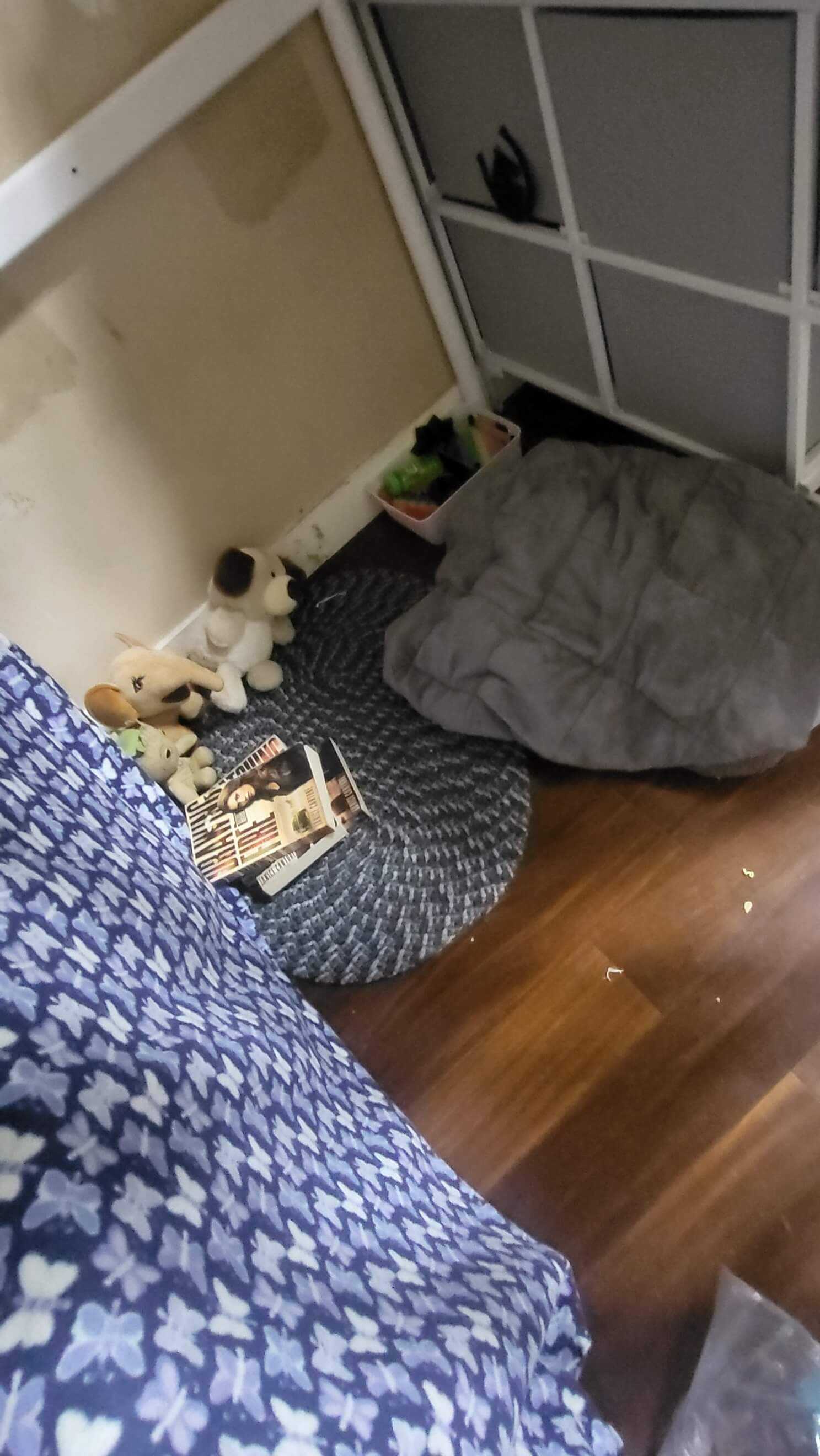
Every kids' ministry room benefits from having a quiet space — a beanbag in a corner, a few fidget tools, maybe some headphones — where a child can go when they're overwhelmed. Not as a consequence. Not as a punishment. Just as a place that says: "it's okay to need a break, and here's where you can take one."
The framing matters. Introduce it to all the kids, not just the ones who struggle. "This is our calm corner — anyone can use it if they need a quiet minute." When it's available to everyone, no child is singled out for needing it.
Sensory tools don't need to be expensive. A small bin with a stress ball, a fidget spinner, a piece of fabric with an interesting texture, a balloon filled with flour to squeeze. Things for hands and bodies to do while brains settle.
5. Know what to say — and what not to say
Most volunteers, when a child is escalating, instinctively try to redirect them to the activity. "C'mon, let's just try it." "If you calm down, we can go do the craft." These are reasonable things to say to a regulated child. They do not work for a dysregulated one.
What actually helps:
"I'm just going to sit near you. We don't need to talk."
This communicates safety without pressure. You're not leaving. You're not demanding anything. You're just present.
"You're really upset right now. I'm here with you."
Name what you see without judgment. You're not trying to fix it yet. You're just letting them know they're not alone in it.
"Can I get you some water?"
Something concrete and caring. It shifts the moment without making a big deal of the behaviour.
What you're doing with all of these is buying time — time for the nervous system to come back down, time for connection to build, time for the child to feel safe enough to re-engage. You cannot rush that timeline. But you can stay with it.
6. When things escalate: four steps to keep in your pocket
Even with every support in place, some moments will still be hard. Here's a simple framework for navigating them — one I teach to volunteers and have been putting on laminated cards small enough to keep on a lanyard.
Protect. Safety and dignity first. Make sure the child and everyone around them is physically safe, and protect the child from shame as much as possible. Move calmly, speak quietly, clear space if needed.
Calm yourself. You cannot co-regulate a child if your own nervous system is activated. Take a breath. Slow down. Your calm is the most powerful tool in the room.
Connect. Not with the activity — with the child. Offer a snack. Sit nearby. Ask about something they love. Talk about their dog or their favourite game. If they let you, put a reassuring hand on their shoulder. You're not rewarding the behaviour. You're rebuilding the relationship so the behaviour can change.
Reset. When the child is calm, try again — but differently. Lower the expectation. Offer a smaller step in. Let them join at whatever level they can manage right now.
Safety. Calm. Connect. Reset.
That sequence won't solve everything. But it will help far more often than pushing through or escalating your own response.
Before next Sunday: one thing
You don't have to overhaul your whole program before the next service. You don't have to buy anything or build anything or train your whole team this week.
Just do this: before you walk into that room on Sunday, take a minute to think about one or two things that help you calm down in a stressful moment. A slow breath. A quiet prayer. A phrase you say to yourself. Whatever it is — know what it is, and plan to use it.
Because the child who is struggling most needs one thing from you above everything else: a volunteer who can slow themselves down before they try to slow the child down.
That's it. That's where it starts.
These kids belong in your room
The families sitting in your pews on Sunday morning — the ones who arrived late, a little frazzled, with a kid who didn't want to come in — they are watching to see if this is a place their child belongs.
They've been turned away before, or made to feel like too much, or smiled at politely while being quietly managed out. They are hoping, maybe without much hope left, that this time might be different.
It can be different. It doesn't require perfection. It requires presence, patience, and a few simple tools.
This fall, I'll be offering volunteer training that goes deeper into all of this — practical, hands-on support for kids' ministry teams who want to serve these families well.
If your church or organization is interested, get in touch here or join the email list for updates.
In the meantime — you've got this Sunday. Go slow. Stay close. You're already doing something that matters.